
When we talk about unhealthy family dynamics, it’s often easy to recognize the obvious red flags—constant criticism, emotional neglect, manipulation, control, favoritism, or walking on eggshells.
But what about the opposite?
What does a healthy family actually look like—not the perfect Instagram version, but the emotionally safe, growth-supporting kind?

This post explores meaningful green flags in a family and contrasts them with common unhealthy patterns so the difference becomes clear.
1. Open, Safe Communication
In healthy families, communication is not about control—it’s about connection.
Family members can:
- Express disagreement without fear
- Share feelings without being mocked
- Ask questions without being shamed
- Have difficult conversations respectfully
Disagreements happen—but they don’t threaten the relationship.
In contrast:
Unhealthy systems shut down dialogue. You may hear things like:
- “Don’t talk back.”
- “You’re too sensitive.”
- Silent treatment instead of resolution.
When communication is unsafe, people learn to suppress themselves. When it’s safe, people learn to express themselves.
2. Respect for Boundaries
Healthy love does not require losing your individuality.
Green-flag families respect:
- Personal space
- Emotional boundaries
- Privacy
- The right to say “no”
Even between parents and children, autonomy is valued.
In contrast:
Unhealthy dynamics may involve:
- Reading private messages
- Forcing emotional closeness
- Guilt-tripping for needing space
- Dismissing boundaries as disrespect
In a healthy home, boundaries are not rebellion—they are part of maturity.
3. Accountability—Even From Parents
One of the strongest green flags in a family is this:
Adults apologize.
Parents admit when they overreact. They acknowledge mistakes. They model responsibility instead of authority without reflection.
This teaches children:
- How to repair relationships
- That mistakes don’t define worth
- That power doesn’t excuse harm
In contrast:
In unhealthy families:
- Authority replaces accountability.
- Blame flows downward.
- “Because I said so” ends the conversation.
Children raised with accountability learn humility and emotional maturity. Children raised without it often learn fear or resentment.
4. Emotional Validation
Validation does not mean agreement—it means acknowledgment.
In a green-flag family, you might hear:
- “I understand you’re upset.”
- “That must have felt embarrassing.”
- “Let’s talk about it.”
Feelings are recognized, even when behavior needs correction.
In contrast:
Unhealthy patterns include:
- “Stop crying.”
- “You have nothing to be sad about.”
- Comparing pain to invalidate it.
When emotions are dismissed, people learn to distrust their inner world. When emotions are validated, people learn emotional intelligence.
5. Encouragement of Independence

Healthy families raise individuals—not extensions of themselves.
Children are supported in:
- Forming their own opinions
- Choosing their own interests
- Exploring career paths aligned with their identity
- Developing their own worldview
There is guidance—but not ownership.
In contrast:
Control-based systems may:
- Dictate life decisions
- Use emotional blackmail
- Shame differences
- Prioritize family image over personal fulfillment
True support prepares someone to stand alone confidently, not remain dependent.
6. Conflict Is Resolved, Not Weaponized
Conflict is normal in every family. The difference lies in how it’s handled.
In healthy homes:
- Arguments stay focused on the issue
- Past mistakes aren’t used as ammunition
- Name-calling is off-limits
- Repair matters more than “winning.”
After conflict, reconnection happens.
In contrast:
Unhealthy families may:
- Bring up old wounds repeatedly
- Attack character instead of behavior
- Turn siblings against each other
- Hold grudges indefinitely
In green-flag families, conflict strengthens understanding instead of creating fear.
7. Affection Without Conditions
Perhaps one of the most important green flags:
Love is not earned.
It is not dependent on:
- Grades
- Career success
- Obedience
- Reputation
- Comparison with siblings
Affection is steady—even during mistakes.
In contrast:
Conditional love often sounds like:
- “We’re proud of you now.”
- Withdrawal of warmth as punishment
- Favoritism based on performance
When love is conditional, children grow up chasing approval. When it is secure, they grow up confident in their worth.
8. Emotional Safety
Emotional safety is subtle but powerful.
In healthy families, you don’t:
- Walk on eggshells
- Monitor every word
- Fear unpredictable reactions
- Feel responsible for managing others’ moods
You can be vulnerable without punishment.
In contrast:
In unhealthy systems:
- Tension feels constant
- Reactions are explosive or icy
- Honesty feels dangerous
Home should feel like a refuge—not surveillance.
9. Age-Appropriate Responsibility
Green-flag families protect children from carrying adult emotional burdens.
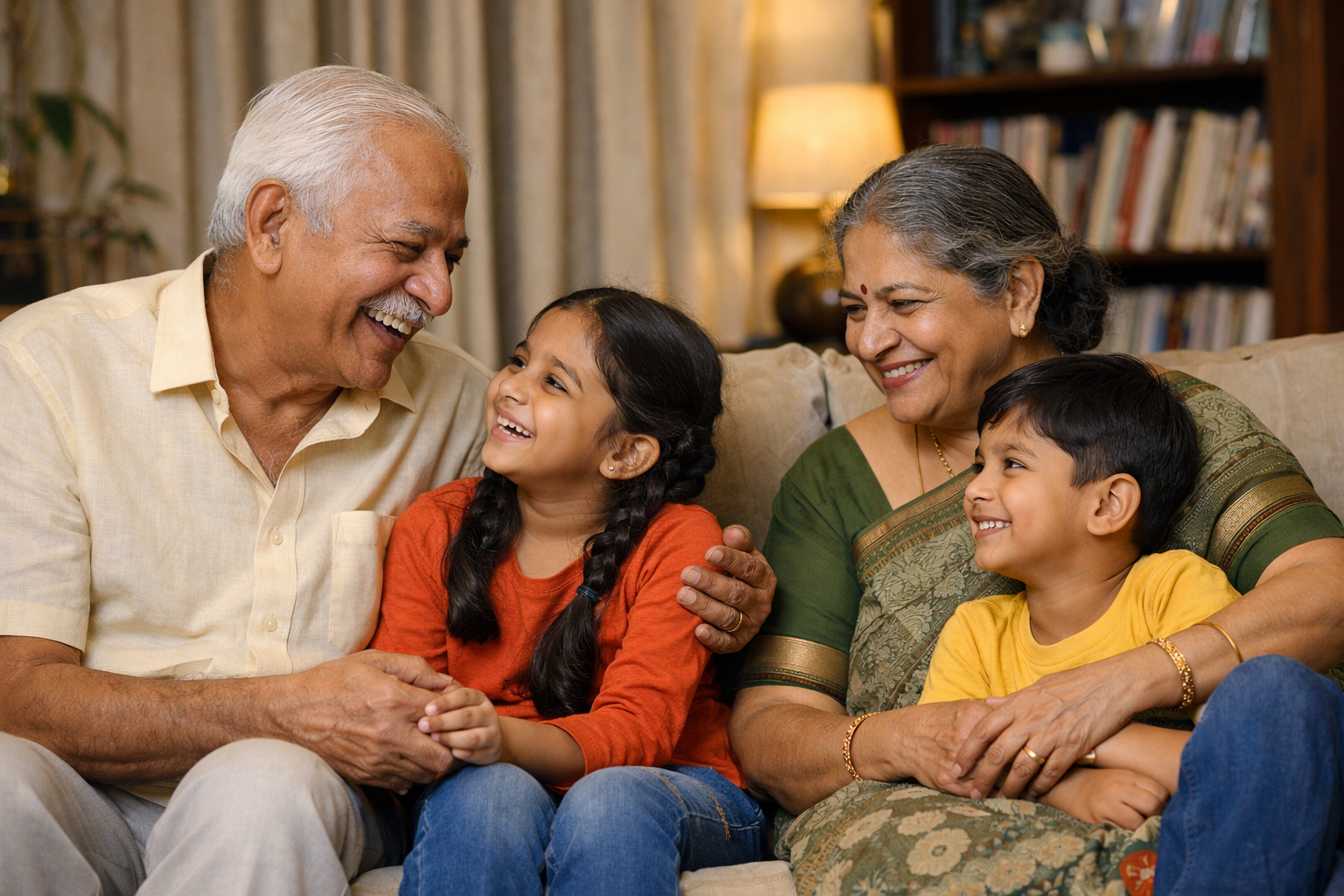
Responsibilities are:
- Fair
- Age-appropriate
- Shared
Children are not expected to:
- Mediate marital conflict
- Act as emotional therapists
- Sacrifice their childhood to stabilize adults
In contrast:
Parentification creates anxiety and long-term stress because children are forced into roles they aren’t developmentally equipped to handle.
Healthy roles create stability. Unhealthy roles create pressure.
10. A Growth-Oriented Mindset
In green-flag families, mistakes are lessons—not labels.
You are not permanently assigned roles like
- “The difficult one”
- “The smart one”
- “The problem child”
Instead, growth is expected. Change is allowed.
In contrast:
Unhealthy families may lock people into identities that limit them. When roles become rigid, evolution becomes threatening.
Healthy systems evolve. So do the people within them.
A Simple Emotional Check-In
If you grew up in (or currently live in) a green-flag family, you likely feel:
- Safe expressing yourself
- Heard and understood
- Respected as an individual
- Allowed to grow
- Loved consistently
In contrast, unhealthy patterns often leave you feeling:
- Anxious
- Small
- Guilty
- Responsible for others’ emotions
- Afraid to be honest
Final Thought
Healthy families are not perfect. They argue. They make mistakes. They have flaws.
The difference is not the absence of problems—it’s the presence of repair, respect, and emotional safety.
Green flags are often quieter than red flags. They don’t create drama. They create stability.
And stability is what allows people to thrive.